


Great bands are always able to convey a central idea
through their use of imagery,words and music. Led Zeppelin built Middle Earth-sized medieval anthems, The Beatles conjured kaleidoscopic-acid-pop and Radiohead code melodies like unseen Web connections.
‘Wait, wait, wait – great bands? I thought this was about Blink-182? And the album where they sing about grandpas jerking off! What, is this guy serious?!’
Look, I won’t attempt to make the case that Blink-182 is a great band. It’s almost assured that the boys from Blink will go down as a relic of their time, a punchline in the “That ’90s Show” of the future. But, regardless of your opinion on “The Mark, Tom and Travis Show,” Blink-182 have at least one thing in common with great bands: they put their stamp on a specific brand of rock ‘n’ roll.

Blink-182 songs are like parking lots.
While not as grandiose an accomplishment as the aforementioned examples, there’s something to be said for parking lots: They’re classically American spaces that can be whatever you need them to be, empty canvases where your experience depends on when you came, where you’re headed and what (or who) you’re bringing along.
As an abstract concept, they hold a lot of weight. Parking lots can be circus tents of pleasure and possibility, dangerous pit stops where you can revel in things that were until then held out of reach and only seen in R-rated movies.
They can also be monuments to solace and sadness, safe places in those times when a suburban street lamp’s shine is the only thing between your mind and a storm of adolescent regret.
The genius of Blink-182 is that they were always able to span this spectrum. Their songs range from jumbled syntheses of pierced-nipple rebellion, junked-Honda nostalgia and awkward-first-kiss love – “Reckless Abandon,” “Roller Coaster” and “Please Take Me Home” – to dead-of-night gas station dirges – “Stay Together for the Kids,” “Story of a Lonely Guy.”
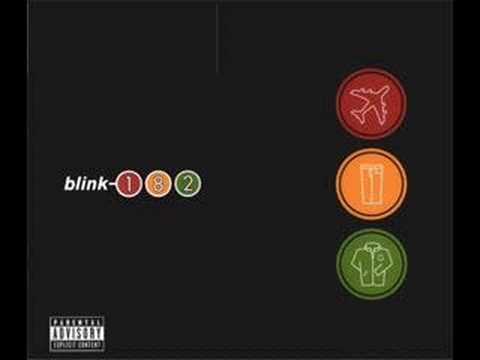
And with “Take Off Your Pants and Jacket” – a pun I admittedly did not get for years – the trio finally capture this idea like Han Solo in carbonite.
While “Enema of the State” seemed stretched too thin, running the gamut from “What’s My Age Again?” to “Adam’s Song,” and their self-titled follow-up was as off-putting an adolescent voice finally cracking into maturity, “Take Off…” was a perfect synthesis, a well-sequenced album that found them stretching out into the anthemic without straying too far from that back-of-the-class ambivalence they always hid behind.
“Online Songs” perfectly captures that era of instant message attractions without overdoing it (see the well-placed vocal punchlines). “Everytime I Look For You” shows just how bland musical parts can be elevated to a true standout if arranged creatively. And then there’s the hits, “First Date” and “Rock Show.” At their worst, these tunes seemed prepackaged for nostalgia. While that may have seemed inauthentic at the time, it hardly matters now – they’re time capsules, even if it’s for a time that never existed.
Twelve years out though, a question hangs over the album. Is “Take Off Your Pants and Jacket” a dated nostalgia piece? Or does it succeed at capturing a time period in a way that will reward younger listeners?
I’d say that the answer here is both.

The issue isn’t the music, which is geared toward young kids. It’s that the music fans who grew up with or around Blink are graying to the point where they can no longer see the true imaginative possibility of these kind of songs. But, this is hardly surprising. By age 30, parking lots are places you stop into occasionally as you rush your way between purchasing forgotten necessities, inconveniences that lie between you and important things.
There’s not a lot to parking lots, other than what you add to them yourself, or what you add to them with others collectively, and that’s true of Blink-182 as well. Their songs are empty canvases of happy, somewhat vague phrases that are just simple enough to define everyone’s experiences.
That’s not to take anything away from the songwriting. At their best Tom DeLonge and Mark Hoppus were able to draw the perfect thin white lines, the kind that allow you populate the rest with whatever you need at the time.
It sounds simple, until you’re in a lot where the lines are painted wrong. This album lets you come and go, and gives you the freedom to see it anyway you’d like. Now just use your imagination.
Verdict: Great. Yes, great. It’s decade-defining.
Pete Rizzo can be reached at prizzo@thoughtpollution.com.